
News
Perspectives
-
08.12.2025NIO Capital Partner Yao Li Decodes AI Investing: Technology Leverage, Model Boundaries, and Data Flywheel
-
26.11.2025NIO Capital’s Ian Zhu Highlights “Dollar per Intelligence” as Key AI Investment Metric at AVCJ Forum 2025
-
19.03.2024NIO Capital's Yao Li: New Opportunities in the “New Normality” of EV Competition
Perspectives
23.10.2025
Mass Production Feasibility and Cost Control Are Key to New Energy Investment, Says NIO Capital's Ian Zhu

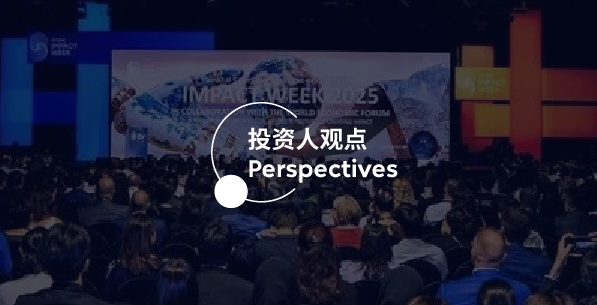
Recently, Ian Zhu, Managing Partner of NIO Capital, was invited to attend the inaugural "IMPACT WEEK 2025" in Singapore. During the event, he spoke exclusively with the 21st Century Business Herald, sharing his perspectives on future investment trends in China' s new energy sector, NIO Capital' s hands-on experience in the field, and issues related to the global expansion of Chinese companies.
Zhu emphasized that China' s industrial ecosystem offers fertile ground for technological innovation, and that NIO Capital consistently evaluates technology through an industrial lens. In addition to the technology itself, he noted, mass production feasibility, cost control, market acceptance, and resource integration capabilities are also core considerations.
Below is the full interview.
Source: 21st Century Business Herald
Technology Mass Production Feasibility Is the Focus of New Energy Investment
21st Century: When NIO Capital evaluates a new energy technology—such as hydrogen energy or energy storage—what factors, beyond the technology itself, do you consider in assessing its synergy with China' s extensive industrial chain and its potential for rapid commercialization? How does China' s industrial ecosystem support technological innovation?
Ian Zhu: We focus heavily on mass production feasibility and cost control—specifically, whether the technology can be manufactured at scale and whether low-cost production is achievable through measures such as sourcing affordable components locally or optimizing logistics. We also evaluate market acceptance: whether corporate and end consumers are willing to adopt and use the technology. In addition, we help portfolio companies integrate resources, connect with customers quickly, and industrialize efficiently by leveraging a high-efficiency, low-cost supply chain. For example, we supported US-based active suspension technology firm ClearMotion in setting up a plant in Changshu, Jiangsu Province. The facility went from groundbreaking to production in just six months, and we helped the company engage with customers to accelerate mass production.
China' s industrial ecosystem offers a highly favorable environment for technological innovation. First, it has a comprehensive industrial chain. In the auto sector, for instance, most components can be sourced within a 100-kilometer radius of Shanghai, providing strong hardware manufacturing support for tech commercialization. Second, there is a culture open to innovation. Chinese companies and consumers are early adopters, creating a high-quality user base. Third, there is strong innovation drive. Companies have moved beyond the low-cost competition model and are now investing heavily in R&D to build product advantages.
We also benefit from a deep talent pool. China produces a large number of engineers, and according to a Stanford University report, more than 40% of the world' s top AI researchers have Chinese roots—providing a solid talent foundation for innovation. Policy support is another key advantage. Government backing for emerging industries has catalyzed large-scale sectors, contributing significantly to economic growth. Finally, as capital markets continue to mature, China' s capital markets are performing strongly, offering innovative companies solid financing channels.
21st Century: We' ve observed that many of the companies NIO Capital backs are well-positioned for global expansion. Beyond providing capital, how does NIO Capital help Chinese tech companies tailor their globalization strategies? How should firms navigate differences in policies and standards in overseas markets?
Ian Zhu: We guide companies to develop a deep understanding of overseas markets, which often consist of multiple fragmented smaller markets. An ecosystem-based approach is essential. This includes hiring local workers when setting up factories, transferring technology to build local capacity, sharing profits with local channel partners and other stakeholders, and jointly building a localized ecosystem. We also assist companies in identifying the right local partners to facilitate their overseas operations.
21st Century: In sectors like hydrogen and energy storage, different technology pathways vary significantly in mass production difficulty and cost structure. How does NIO Capital view these differences, and how do you identify the most mass-production-ready technology directions?
Ian Zhu: These variations represent both challenges and opportunities—it ultimately comes down to balancing efficiency, cost, and scenario applicability. In our investment process, we conduct in-depth supply chain research, analyze policy cycles, and assess application scenarios to evaluate a technology’s maturity, cost-reduction potential, alignment with policy, and suitability for specific use cases. We weigh technological innovation against risk, and prioritize those technology directions that have a solid foundation for scaled mass production and a clear path to commercialization.
21st Century: Beyond financing, in what other critical areas can investors like NIO Capital support the transition of technology from the lab to mass production?
Ian Zhu: We see ourselves not just as capital providers, but as “value connectors” and “industry accelerators.” Specifically, we focus on four dimensions:
First, scenario validation and early-order support. We help portfolio companies test their technologies in real industrial settings. For instance, within NIO' s supply chain, promising technologies can receive validation opportunities and even direct purchase orders—enabling iterative improvement and maturation through real-world application.
Second, key resources for industrial implementation. This includes support with site selection, capacity planning, and government relations. Leveraging our industrial ecosystem, we help companies systematically resolve early-stage operational challenges.
Third, core team building and organizational empowerment. Scaling technology requires not only R&D talent, but also managers skilled in delivery, project management, supply chains, and marketing. We have actively helped several portfolio companies recruit executives with “0-to-1” mass production experience to fill critical gaps.
Finally, strategic partnership development. Depending on the company' s growth stage, we facilitate connections with relevant industrial partners and potential investors to build a long-term, collaborative ecosystem.
Going Global Requires Long-Term Patient Capital
21st Century: In the past, “Made in China” went global. Now, it' s “Intelligently Made in China” and “China Solutions” expanding abroad. In the green tech sector, what is now the core competitive advantage of Chinese companies going global, beyond cost efficiency? Which Chinese innovations or business models are most likely to become global solutions?
Ian Zhu: The competitive edge of Chinese companies in green tech is shifting from cost efficiency to technology-driven product strength, underpinned by integrated industrial chains and a supportive innovation ecosystem. Among Chinese innovations, new energy vehicles and related technologies are the most likely to achieve global relevance. China leads in intelligent EVs, with advances in battery swapping, autonomous driving, and chip development. In addition, China’s battery sector demonstrates strong innovation capabilities and industrial advantages—making it another area with potential for global solutions.
21st Century: In today' s complex international trade environment, what new risks do Chinese green tech companies face in their global expansion?
Ian Zhu: The global trade landscape is increasingly complex, particularly given the accelerating pace of policy changes in the US market. In this context, companies must carefully position themselves and actively identify their competitive advantages. In response to global environmental challenges, NIO Capital advocates for international collaboration—researching how innovative competition mechanisms and financial allocation models can be used to address major global issues.
21st Century: How does NIO Capital help portfolio companies establish more resilient global operations? What capabilities should these companies develop?
Ian Zhu: Companies should focus on developing the following: First, a deep understanding of overseas markets—their characteristics and demands—and the ability to adapt business models accordingly. Second, a capacity for ecosystem collaboration—being willing to share benefits and cooperate with local players to build sustainable market ecosystems. Third, patience. Global expansion is a long-term process that requires persistence and long-horizon investment. Finally, continuous innovation—using technology to drive product upgrades and maintain competitive advantage.
21st Century: Green tech investing is known for long cycles and high early-stage risk. How does NIO Capital structure its operational system around long-term patient capital?
Ian Zhu: To build a long-term patient capital framework, we encourage more innovation-focused funds, insist on sufficiently long capital cycles, and accept a certain degree of failure in the investment process. At the same time, we rely on healthy capital markets—such as China' s currently robust mainland and Hong Kong markets—to provide viable exit channels.
Announcements
-
08.12.2025NIO Capital Partner Yao Li Decodes AI Investing: Technology Leverage, Model Boundaries, and Data Flywheel
-
26.11.2025NIO Capital’s Ian Zhu Highlights “Dollar per Intelligence” as Key AI Investment Metric at AVCJ Forum 2025
-
19.03.2024NIO Capital's Yao Li: New Opportunities in the “New Normality” of EV Competition
Subscribe to our newsletter


